Country food starter guide
What to Eat in Thailand: Pad Thai Flavor Guide
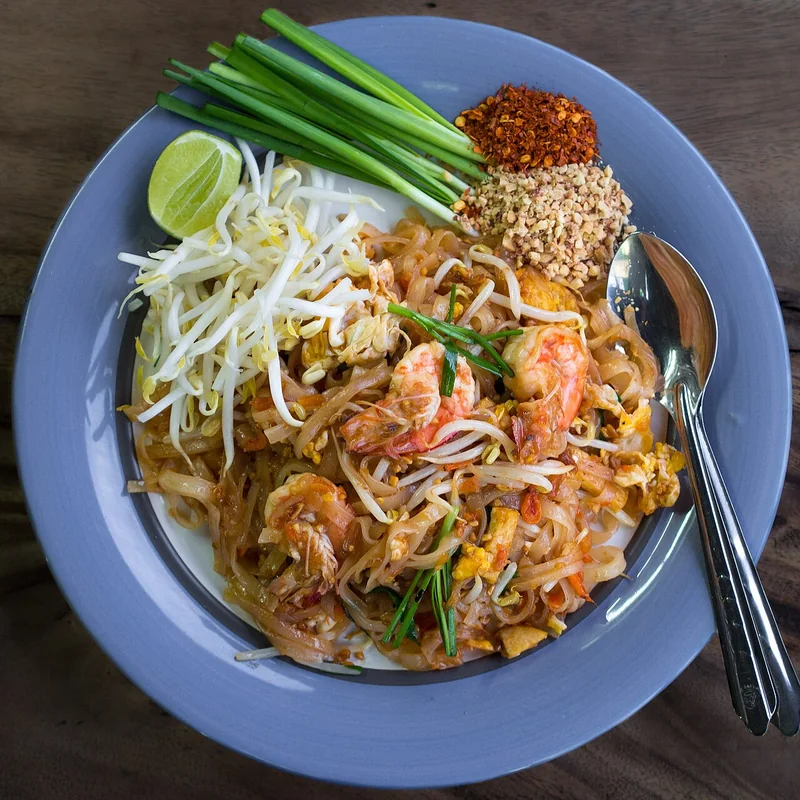
Thailand’s regional cooking reaches far beyond one noodle dish, but pad Thai is a useful lesson in assembling balance quickly in a hot pan. Rice noodles take on a sauce shaped by tamarind, fish sauce and sweetness, then gain contrast from egg, sprouts, peanuts and lime. This guide treats it as one recognizable starting point while leaving room for the country’s many soups, curries, salads and regional specialties.
How the flavors fit together
Pad Thai typically layers tangy tamarind, salty fish sauce and measured sweetness around chewy rice noodles. Peanuts add roast and crunch; sprouts and lime brighten the finish. Dried chile can add heat at the table, but the aim is often a moving balance among sour, savory, sweet and fresh elements.
How to choose a first dish
Choose pad Thai when you want a dry-tossed noodle dish with several textures rather than a bowl of broth. Taste before adding lime, chile or extra seasoning so you can adjust one direction at a time. CraveLoop offers a fictional selection and does not list Thai restaurants, local prices or delivery within Thailand.
Broaden the table
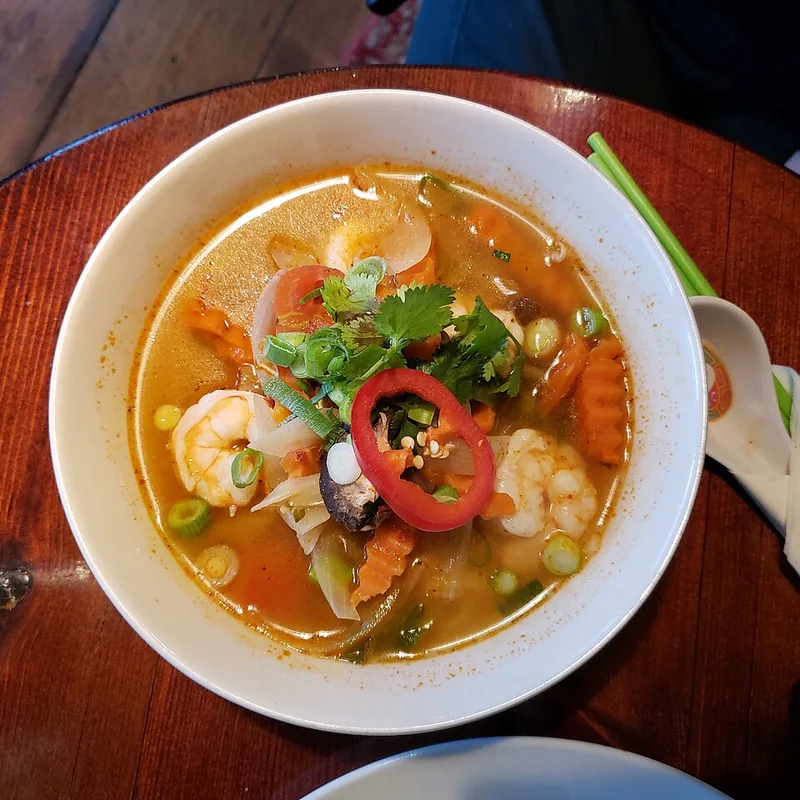
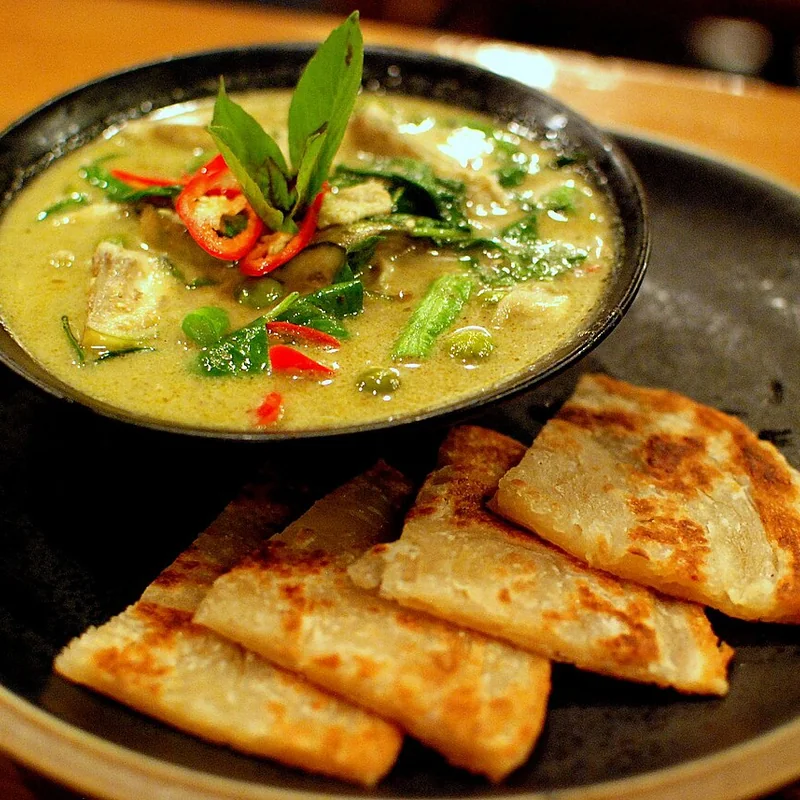
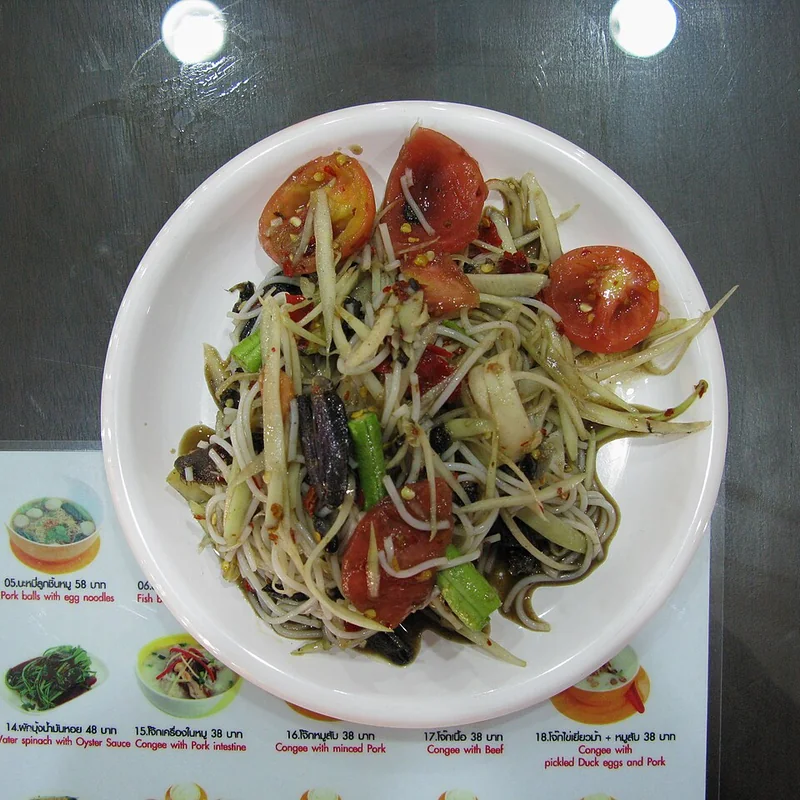
Broaden the route with som tam for a sharp green-papaya salad, tom yum for an aromatic hot-and-sour soup, and green curry for herbs, coconut and chile. Their balance and intensity vary by region, cook and serving context.
CraveLoop
Start with these dishes
Useful answers
Questions people ask
What does pad Thai taste like?
It usually moves among tangy tamarind, salty fish sauce, restrained sweetness and roasted peanuts, with lime and sprouts adding freshness. The exact balance and chile heat vary by cook.
Is pad Thai a soup or a dry noodle dish?
It is generally a stir-fried noodle dish rather than a soup. The sauce coats the rice noodles in the pan, while egg, sprouts, peanuts and other additions create contrasting textures.